Coalition Building

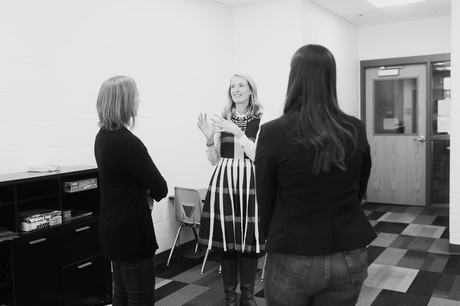
Prevention isn't possible in isolation. Together, we can do so much more.

The Child Sexual Abuse Prevention Coalition Model

The Child Sexual Abuse Prevention Coalition Model

Launching a collaborative prevention initiative demands enormous time, resources, and organizational capacity; capacity that most states and local prevention leaders simply don't have. As a result, promising coalitions stall, fragment, or never launch at all.

Local leaders are the experts on their state's unique needs. Our role is to stand alongside them, resourcing their expertise with the infrastructure to scale it.

The CSAP Coalition Model is the only comprehensive, end-to-end framework designed specifically to solve this problem for child sexual abuse prevention. Developed by kNot Today and grounded in Collective Impact principles, the three-phase model moves states from mobilization to implementation to sustainability.

Throughout each phase, kNot Today works as a behind-the-scenes infrastructure partner, equipping state backbone organizations with the tools, research, and strategy they need to lead lasting systems change.

Phase 1: Mobilize

A systems problem demands a systems response. lays the groundwork. Before any coalition launches, the landscape is mapped, the baseline is measured, and the infrastructure is built.

Phase 2: Implement

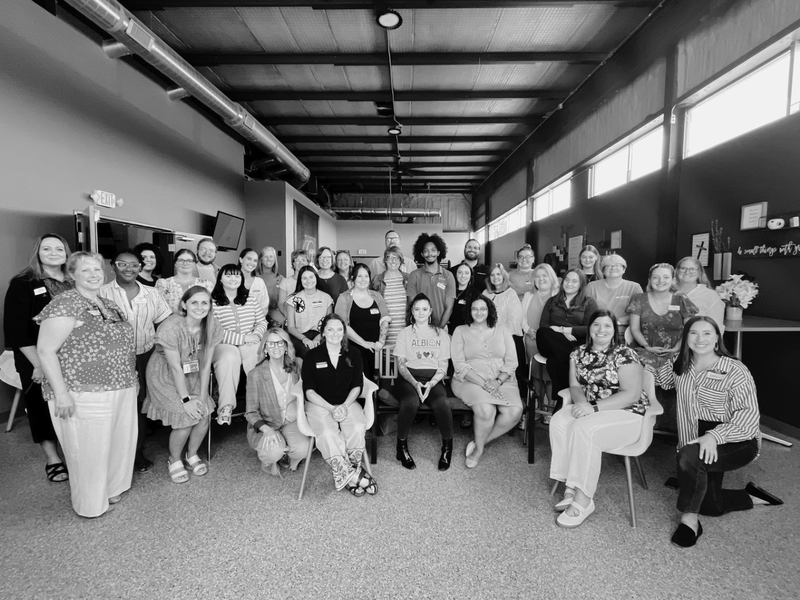
Shared tools. Shared measurement. Shared impact. is where the coalition comes to life. With foundational infrastructure in place, members shift from planning to execution.

Phase 3: Sustain

Dollars Follow Data. is the handoff. Coalition leaders take the lead, with the infrastructure in place to scale the work and unlock the funding to sustain it.
What Makes Our Model Unique

  • Dual-Tiered Coalition Structure: The model intentionally breaks from top-down approaches by bringing state and systems leaders into alignment with local professionals. Every coalition operates through four interconnected bodies—the Founding Advisory Council, Steering Committee, Working Groups, and General Membership Body—ensuring opportunities and barriers are addressed collectively rather than dictated from above.
  • Behind-the-Scenes Infrastructure Partnership: kNot Today serves as the national infrastructure partner, absorbing the operational and administrative lift so state backbone organizations can lead publicly as the face of the work. This preserves local authority and relationships while providing the capacity needed to build and sustain a statewide coalition.
  • Framework, Not Prescription: The CSAP Model is designed to gather local insights rather than impose a predetermined solution. Every coalition's priorities, structure, and deliverables are shaped by what research reveals about the state, ensuring the model adapts to each state's unique landscape.
  • Embedded Research Partnership: A research partner is built into the model from Phase 1 forward, supporting systems mapping, a statewide prevalence study, a custom logic model, and ongoing evaluation. Measurement is treated as foundational infrastructure rather than an afterthought.
  • Grounded in Collective Impact: The model is aligned with Collective Impact principles and Prevent Together's National Plan, ensuring every coalition operates with a common agenda, shared measurement, mutually reinforcing activities, continuous communication, and backbone support.
  • Built for Independence: Unlike models that create long-term dependency on a national partner, the CSAP Model is explicitly designed to transition coalitions into self-sustaining leadership. kNot Today's role decreases over time by design, with coalitions graduating into an ongoing peer-learning network rather than remaining reliant on outside support.
  • Systems Mapping: A research process that identifies existing prevention efforts, service gaps, and leverage points where coordinated action will have the greatest impact. Because the CSAP Model is a framework, not a prescription, systems mapping ensures each coalition is built around real local conditions, shaping its priorities, structure, and deliverables to fit the state.
  • Statewide CSA Prevalence Study: In partnership with The Center for Violence Prevention Research, kNot Today establishes a baseline rate of victimization within the state. Without this baseline, it's impossible to know whether prevention efforts are moving the needle. With it, the coalition has the data needed to make informed decisions, demonstrate impact to funders, and hold itself accountable over time.
  • Coalition Logic Model & Evaluation: The research partner works with the coalition to develop a logic model grounded in systems mapping results, defining measurable outcomes tied to the state's prevention landscape. Ongoing evaluation tracks not only whether CSA is decreasing, but whether the coalition's operations are functioning as designed.
  • Coalition Infrastructure Buildout: kNot Today works with state backbone organizations to establish the coalition's operational foundation: governance structures, meeting cadences, communication protocols, shared technology platforms, and a coalition handbook outlining roles, expectations, and decision-making processes. This behind-the-scenes administrative lift means the coalition launches ready to operate rather than ready to plan.
  • Coalition Launch: Phase 2 marks the formal activation of the coalition's four bodies: the Founding Advisory Council, Steering Committee, Working Groups, and General Membership Body. This transitions the coalition from a structure on paper to a highly resourced network with a statewide CSA prevention plan.
  • The Bridge: kNot Today's digital platform built for CSA prevention professionals. The Bridge houses a customized coalition dashboard where members collaborate, access resources, and contribute standardized data in real time, giving the coalition a clearer, more accurate picture of collective impact than any single organization could produce alone.
  • Standardized Shared Measurement: Coalition members contribute data to a common measurement framework through The Bridge, enabling tracking of collective progress and surface trends across the state rather than relying on fragmented, organization-level reporting.
  • Coalition Member Funding: kNot Today provides microgrants and larger prevention funding to coalition members, creating direct financial incentives for active participation and data contribution. This ensures members are resourced to engage meaningfully rather than asked to participate on top of existing workloads.
  • Evidence-Driven Working Groups: Working Groups draw directly from Phase 1's systems mapping results to identify and align around shared project deliverables, ensuring every initiative is grounded in state-specific data rather than assumptions.
  • Sustainability & Transition Plan: kNot Today works with backbone organizations to develop a formal transition plan, including funding diversification strategies, leadership succession pathways, and readiness benchmarks the coalition must meet before operating independently. This ensures the handoff happens when the coalition is ready, not on an arbitrary timeline.
  • Continued Access to The Bridge: Even after transition, coalition members retain access to The Bridge, connecting them to a national peer-learning network of CSA prevention professionals. This keeps state coalitions aligned with evolving best practices and ensures independence doesn't mean isolation.
  • Ongoing Support & Grant Eligibility: Transitioned coalitions remain eligible for ongoing kNot Today support, including technical assistance upon request and access to grant funding opportunities. This preserves a safety net for coalitions as they navigate independent operation without reverting to full dependency.

Coalition Network

Indiana Prevention Education Coalition

Indiana Prevention Education Coalition

(IPEC) launched in 2022. Their purpose is to empower every Indiana student with prevention education in the classroom, to connect those who have experienced harm to services, and to ultimately prevent abuse from happening in the first place.
Prevention First North Carolina

Prevention First North Carolina

(PFNC) started development in 2025 and launched in 2026. Their purpose is to coordinate, strengthen, and scale child sexual abuse prevention across the state by aligning people, systems, and resources around what works. They aim to move prevention from isolated efforts to coordinated, statewide action, creating the conditions for lasting impact.

Awesome Sauce
“We had the knowledge and the commitment, but not the infrastructure. Now everything we need to do our work effectively is finally within reach.”

Coalition Member Indiana Coalition · kNot Today Partner
Awesome Sauce
“We had the knowledge and the commitment, but not the infrastructure. Now everything we need to do our work effectively is finally within reach.”
Coalition Member Indiana Coalition · kNot Today Partner
Awesome Sauce
“We had the knowledge and the commitment, but not the infrastructure. Now everything we need to do our work effectively is finally within reach.”
Coalition Member Indiana Coalition · kNot Today Partner
Awesome Sauce
“We had the knowledge and the commitment, but not the infrastructure. Now everything we need to do our work effectively is finally within reach.”
Coalition Member Indiana Coalition · kNot Today Partner
Awesome Sauce
“We had the knowledge and the commitment, but not the infrastructure. Now everything we need to do our work effectively is finally within reach.”
Coalition Member Indiana Coalition · kNot Today Partner

Want to bring our model to your state?

We would love to hear from you!

Contact Us Today